My comments on Bob Borson's Life of an Architect blog:
Bob Borson writes interesting blogs about the practice of architecture that have provided some enjoyable reading over the years. One topic came up a while back, titled “10 Mistakes Architecture Students Should Avoid”. It does not appear, though, that he talks so much about “mistakes” in it as he does about the opposite, which is what “to do,” rather than what “not to do.” Bob has invited his readers to comment and offer their own take, so here I go:
The first on his list contains what Bob considers “what matters” in life. It can be summarized as having a balanced existence. Friends, etc. OK. So far, so good.
The second, third, and fourth items on the list have to do with not putting too much importance on what your professor thinks and says, or even caring too much about it. Or not caring at all. He suggests, however, that one should take everything said into consideration, as it can always be rejected later. This is probably the whole essence of learning, I would think. So, OK again.
It has been a long time since I was in architecture school, so my memories may be a little dim, but it has always been my take that whatever was said about my student work is simply that person’s (the professor’s) educated and experienced opinion. It is up to the student (me) to accept or reject it, hence developing one’s own opinion. I think that is what Bob is trying to say. Further, though, it is the professor’s (critic’s) job to ascertain what the student is trying to do and to help the student do it. The “big idea” always informs and determines the next sequence of moves, but a person may need help in identifying what that is. Keep it simple; it gets complicated on its own without even trying.
Keeping it simple, if I remember correctly, was something I struggled a bit with in graduate school. I had a sympathetic professor who, one day after studio, shared with me in the hallway how he had fought architectural context and the act of keeping it simple his whole career. He discussed context in my project and how he had struggled with it as well. He was a pretty successful and well-known practitioner, so this kind of set me back a bit. I didn’t think he struggled with anything. I learned a lot in that exchange: it would be up to me to figure it out.
Number 5 on Bob’s list is "networking". The advice is to start while in school (Bob didn’t). I think I did this to a certain extent, though, but, as is pointed out, social networking is so much easier now. So, reach out to those who inspire you. “Do this with people who matter to you.” I have found, not surprisingly, that staying in the same city or region in which you went to school is even better (I didn’t). Those contacts made in college can last a lifetime.
Next is "voluntering. Bob has volunteered to do his blog, along with other professional activities, but he had not come to that realization until adulthood. This is a subject that is dear to my heart, for I had volunteered two years of my life in VISTA (Volunteers In Service to America). There, in addition to architecture school, I began to make lifelong friends and contacts. I was only tangentially doing architecture; it was more of a community-organizing effort, and it taught me permanent skills I could not have gained working in an architect’s office. And in doing so, I worked with people who were making a difference. I can’t say enough about my VISTA experience.
Next, Bob suggests that students pinning up their WORK for jury scrutiny associate it in their own minds with who they are as a person. He says, “don't do that.” Do not worry about how you come off. Your personality will come out naturally if you let it. This goes back to the first point of being yourself and having a life that comes across as a part of your personality. It will always work out better for you. Bob can’t emphasize this enough. As a very successful architect friend of mine says, they hire you because they like you. Applies to students as well.
The next on the list is "procrastination". I don’t do this. I want to get it done and off my mind. Sometimes it backfires, though, and I enter a rabbit hole early that I have trouble getting out of. Nuff said. Don’t procrastinate.
The 9th point on the list is “comparing yourself to your classmates.” I differ somewhat with what is said here. I learned a lot from my classmates, and I think everyone does. For whatever reason, though, he lists this as a mistake and something to be avoided. It may be, as stated in the previous paragraph, that he means a student is best served by “being yourself,” but those of us who have been in architecture school know what we learn from others. Even though we know what we don’t know, we sometimes see those things we don’t know in others and learn from them. Learning from how others address it, not imitating it, is another educational tool that, again, lasts a lifetime. Both big things and small: I still remember Jane Shapiro (RIP) in third-year studio showing me how to do watercolor and colored-pencil trees in my illustrations. I still do it that way today, but then with a bit of Photoshop. I always think of her.
The tenth and last on the list is being a perfectionist. A big mistake. This seems to coincide with Bob Borson’s previous contention of being a well-rounded person versus spending all of your time on one thing to get it “perfect,” which is what Bob says of himself. So…there is a point of diminishing returns when a project is overworked, and it is just as much a mistake as one that is “underworked.” Determining the sweet spot is the trick, of course. It is learned through experience. In the end, it is the piece of architecture that is built, not the drawings. Architecture as art is never perfect, and a building when completed is never perfect, but when professionally done, ninety-some percent complete is as close as it ever gets. This is widely known to architects and contractors. It’s the nature of it.
So this is Bob Borson’s outline of things to avoid when in architecture school and possible techniques to impose on oneself to get through it, and to get the most out of it. Along with my own experiences and comments, as invited by the author.
As an associated thought, I have added photos of some architecture schools around the country (there are dozens, of course), where the previous thoughts are considered. There is no particular logic as to which are selected.
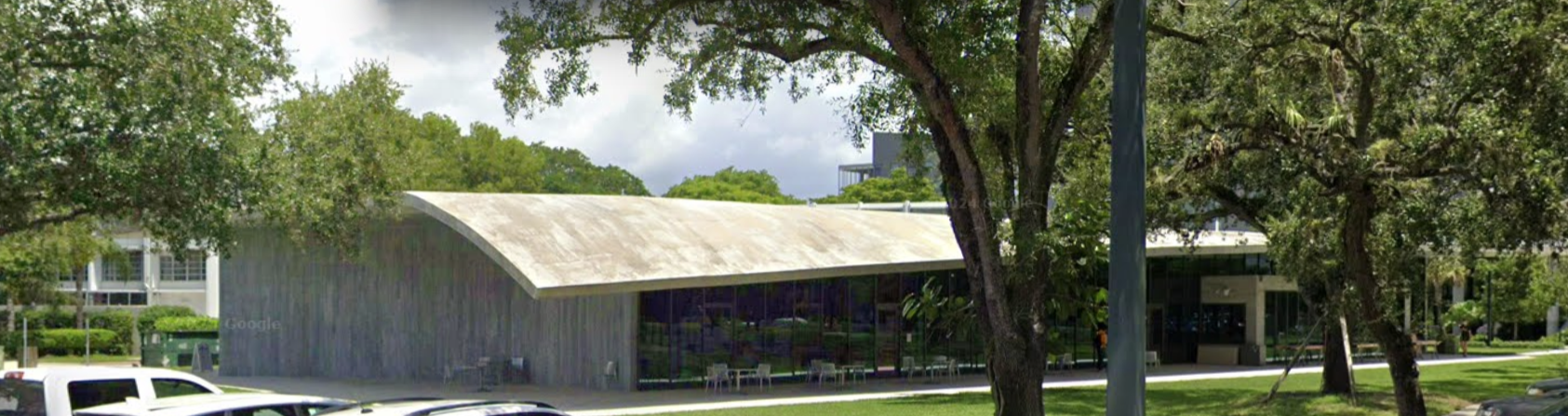
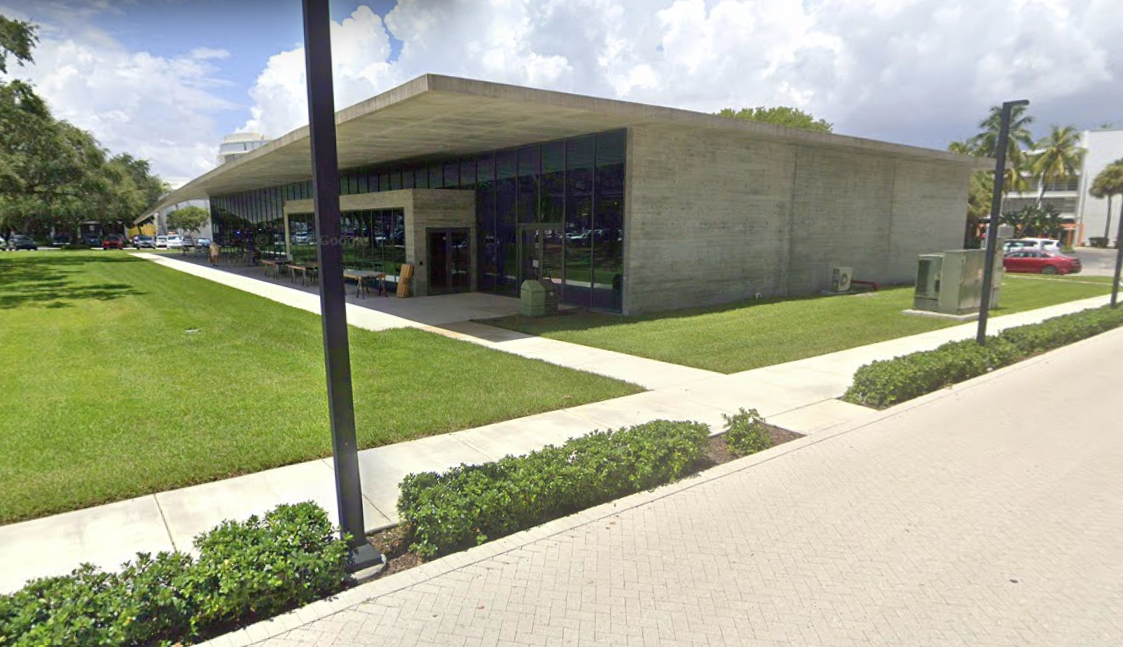
The first is the Thos. P. Murphy Design Studio at the University of Miami School of Architecture, a small and interesting cast-in-place concrete structure designed by Arquitectonica:
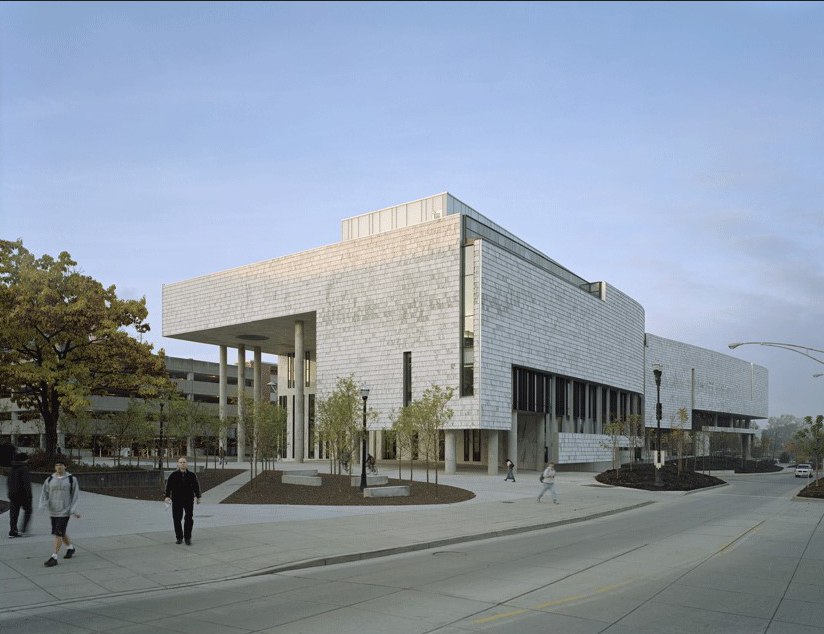
Another is the Knowlton School of Architecture at The Ohio State University, designed by Mack Scogin Merrill Elam Architects / Wandel and Schnell Architects:
Ludwig Mies van der Rohe’s very famous Crown Hall at the Illinois Institute of Technology:

This school of architecture below is at the University of Pennsylvania. The building shown is adjacent to a newer facility, but at the time of my own architectural education, it was called the Furness Building and was where I had my studio classes. It was named after its architect, Frank Furness. Furness was not only a famous 19th-century architect; he was also a Congressional Medal of Honor recipient for his service during the Civil War. It is now named the Fisher Fine Arts Library:


There are dozens of other notable architecture schools throughout the U.S. (there are 11 in California alone).
An interesting and obscure example outside of the U.S. is in the remote city of Umeå, Sweden:

Blog post written by Senior Architect, David Tritt.